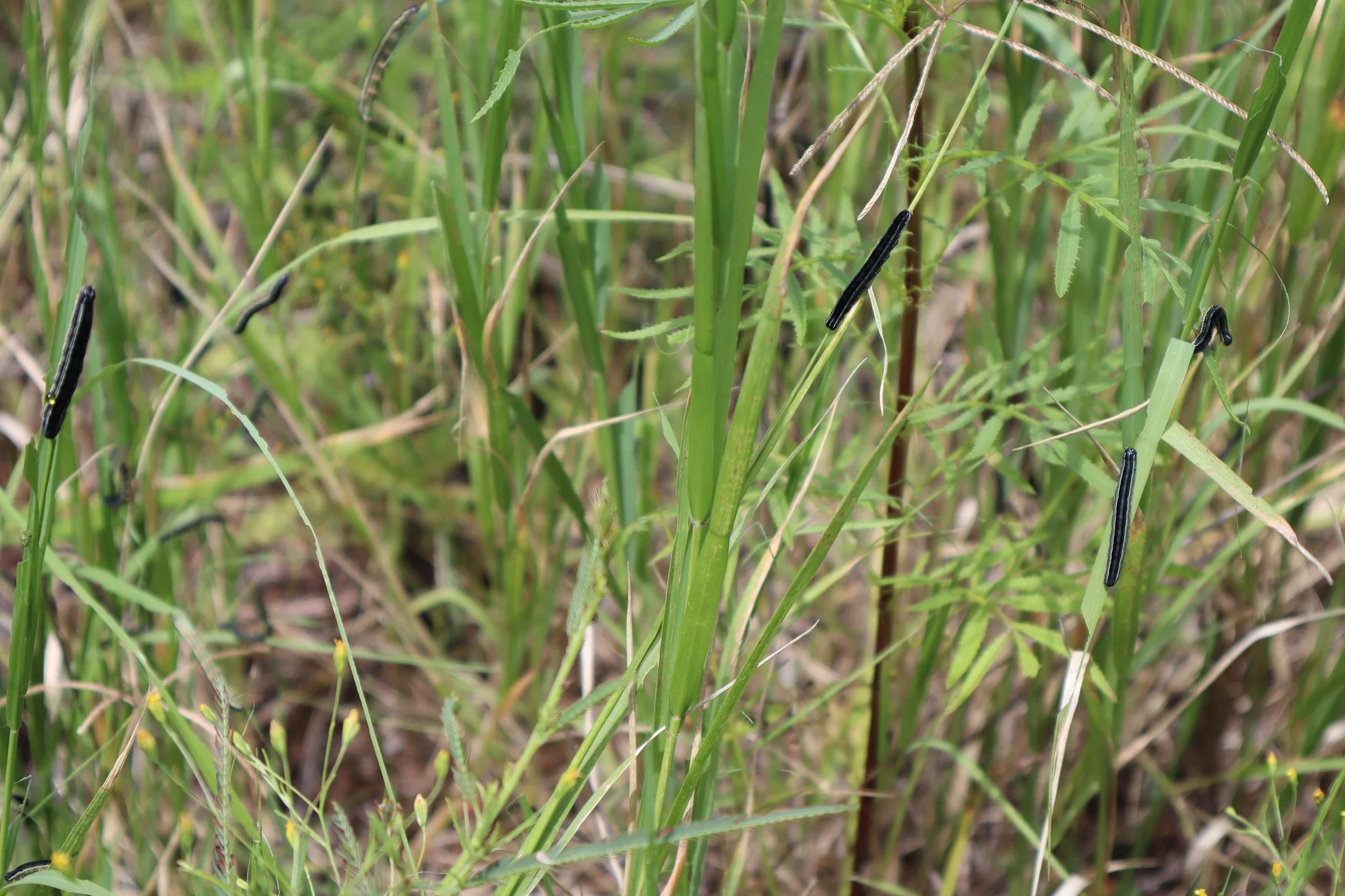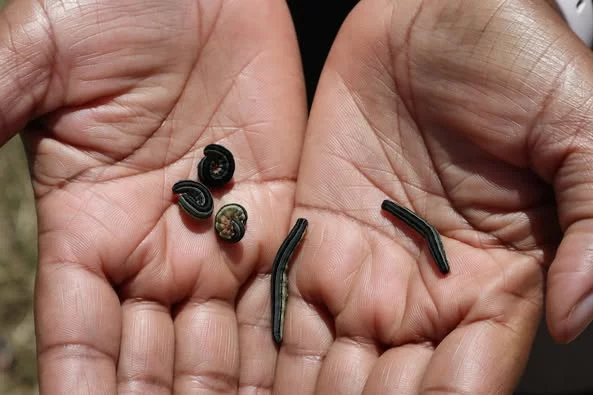
Farming crops around Chief Albert Luthuli Municipality are under threat from an outbreak of African Armyworm with potential devastating losses.
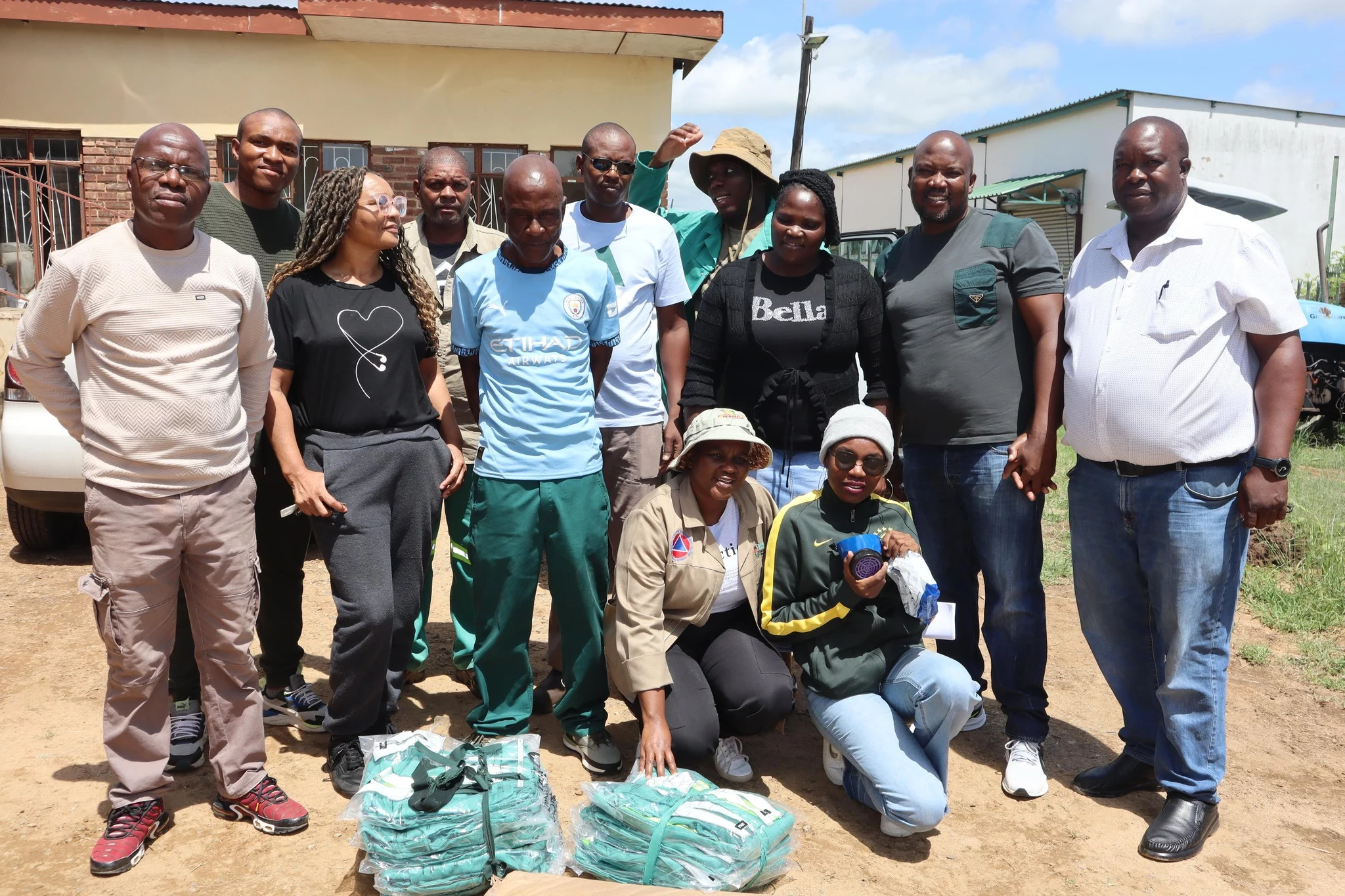
The Department of Agriculture Rural Development Land Environmental and Affairs (DARDLEA) and the National Department of Agriculture (NDoA)) met with local farmers at Elukwatini to work on an intervention plan. The NDoA and DARDLEA responded promptly to a plea for assistance and convened an urgent workshop to provide training and demonstrations on the use of chemicals to help combat this devouring pest.
Experts believe the onset of the wet season, bringing new growth to dry grasslands and cereal crops, may have triggered the outbreak. A female African Armyworm lays between 10-300 eggs on leaves.
These turn from white to dark brown just before hatching. The African army worm is widespread throughout sub-Saharan Africa and feeds mainly on maize, sorghum, small grains, sugarcane and turf grasses.
Infestation of the African army worm occurs in cycles of approximately ten years, with an epidemic year often being followed by a year without infestations. Larvae occur in swarms, migrating together as food sources become depleted.
To combat the outbreak, bags of Sumi Alpha DP chemical, protective clothing, respirators, overalls and manuals have been distributed to farmers in the affected areas. They were also trained on the safe use of common chemicals such as Pyrethroid Cypemethrin (UL), Demaltamethrin (UL) and Esfenvalerate (UL and DP).