
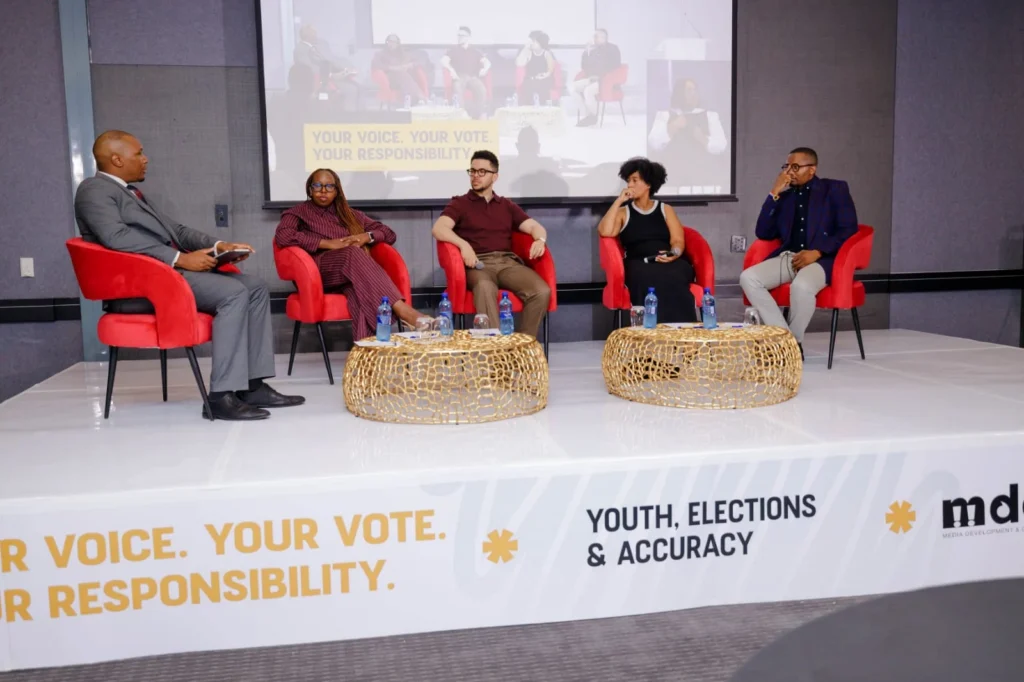
The role of the media in promoting informed youth participation, fighting misinformation and strengthening democracy came under the spotlight during the Media Development and Diversity Agency’s (MDDA) Youth, Elections & Accuracy panel discussion held at The Maslow Hotel in Sandton on November 3.
Held under the theme “Your Voice. Your Vote. Your Responsibility.”, the non-partisan dialogue brought together media practitioners, political analysts, journalists, broadcasters and digital content creators to explore how young South Africans can navigate election information and make informed decisions.
Moderated by Oliver Dickson, the discussion featured Dr Sizwe Mpofu-Walsh, Tessa Dooms, Zimasa “Mooshtaffa” Vabaza, Dan Corder and Kgomotso Modise, who shared perspectives on the relationship between media, elections and civic participation.
A key focus was how young people can distinguish credible election information from misinformation, particularly as political content increasingly circulates through podcasts, short videos and social media platforms.
The discussion highlighted that even authentic videos can be misleading when shared with incorrect dates or locations, while widely circulated allegations are not necessarily supported by evidence.
Participants examined the responsibility of journalists and digital creators to verify information before publishing or sharing it, clearly communicate uncertainties and ensure that corrections reach audiences who may have encountered inaccurate reports.
With election results coming in and attention shifting towards incoming ward councillors, the engagement also raised questions about the media’s performance as the fourth estate during the election period.
Among the issues considered were whether young people had sufficient opportunities to express their views before voting, whether political parties received fair coverage and how newsrooms responded to misinformation during the campaign.
The importance of community media in strengthening accountability was another key discussion point.

Community radio stations, local newspapers and digital platforms were highlighted as important channels for connecting political promises with the everyday concerns of residents, including access to water, road infrastructure and municipal service delivery.
The discussion emphasised that election coverage should not end when voting stations close. Instead, journalists and communities should continue following up on campaign promises, municipal budgets and commitments made by elected representatives.
Responsible reporting on sensitive issues, including protests, political violence and migration-related tensions, also formed part of the programme.
The panellists explored how journalists and content creators can report in the public interest while verifying competing accounts, protecting vulnerable sources and ensuring that affected communities receive a fair hearing.
The dialogue further highlighted the importance of distinguishing peaceful protests and legitimate political criticism from intimidation, incitement and violence.
The engagement forms part of the MDDA’s broader efforts to support a diverse media sector and improve access to information.
It is expected to inform practical recommendations for community media, media support organisations and other stakeholders, particularly around information verification, responsible reporting and strengthening informed youth participation in democracy beyond election day.

