
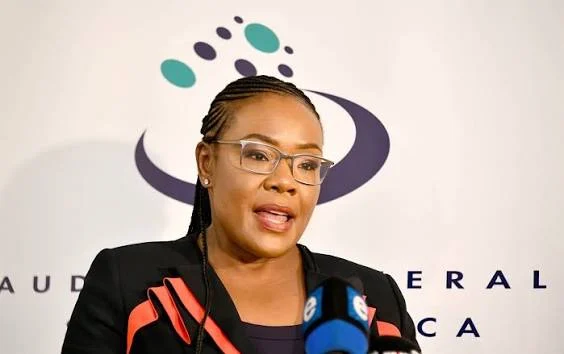
According to the Auditor-General of South Africa Tsakani Maluleke
The Mpumalanga Provincial Government has welcomed an improvement in the province’s 2025/26 audit outcomes, while acknowledging that significant challenges remain in strengthening financial management, compliance, accountability and service delivery.
According to the Auditor-General of South Africa (AGSA) Tsakani Maluleke, eight provincial auditees achieved unqualified audit opinions with no findings, commonly referred to as clean audits, as at 31 August 2026. This represents a significant improvement compared with the previous financial year.
A further four auditees received unqualified opinions with findings, while six received qualified opinions with findings. Four audits were still outstanding at the cut-off date.
The provincial government particularly welcomed the improved performance of the Department of Economic Development and Tourism, the Mpumalanga Economic Growth Agency and the Nkomazi Special Economic Zone, which all achieved clean audit outcomes during the latest audit cycle.
The improvements have been attributed to strengthened consequence management, improved leadership capacity, targeted interventions and the timely implementation of audit recommendations.
Premier Mandla Ndlovu incorporated the improvement of audit outcomes into the performance agreements of Members of the Executive Council (MECs), while Provincial Treasury strengthened pre-audit reviews of annual financial statements. MECs also increased their monitoring of audit action plans, which became a standing item for executive oversight.
However, the provincial government said it remains concerned about persistent weaknesses, particularly regarding compliance with laws and regulations and supply chain management.
The AGSA report records R835 million in irregular expenditure, while only three auditees assessed in the area were found to have good financial health.
Although irregular expenditure declined from R10.18 billion to R9.59 billion and unauthorised expenditure fell from R1.04 billion to R980 million, fruitless and wasteful expenditure increased from R264.87 million to R352.51 million.
Of particular concern is that R7.01 billion, representing 64% of UIFW expenditure, had not yet been dealt with.
The provincial government has pledged to intensify consequence management and ensure that accounting officers investigate outstanding unauthorised, irregular, fruitless and wasteful expenditure.
Infrastructure project management has also been identified as an area requiring urgent attention, with poor planning, inadequate budgeting, late payments and weaknesses in contract management contributing to delays.
The province said it would strengthen the capacity and utilisation of the Project Management Unit in the Office of the Premier, while improving implementation of the District Development Model.
The AGSA also found that filling critical vacancies had improved capacity in finance units, contributing to nine auditees submitting credible financial statements and 12 submitting credible performance reports.
Premier Ndlovu is expected to continue holding MECs and Heads of Department accountable through performance monitoring and engagements.
The provincial government said clean governance must become the norm, with accountability carrying consequences and public funds ultimately translating into improved services and better lives for the people of Mpumalanga.

